





About the project
Modernisation of the railway Belgrade – Niš
The Belgrade-Niš railway is an integral part of the European railway network (Corridor X) and is of the greatest importance for the domestic and international traffic in the Republic of Serbia. Railway Corridor X includes 872 km of double-track railway (Approximately 23% of the entire railway network) and it connects Serbia with Croatia, Hungary, Bulgaria, North Macedonia, and, further south, Greece.
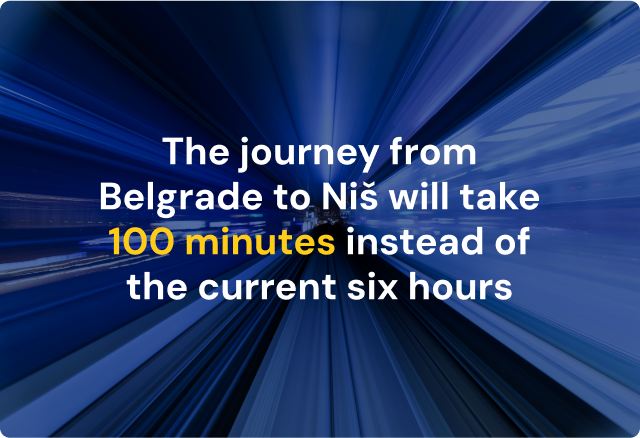
With the support of the European Union (EU) modernization, reconstruction and extension of the railway connecting Belgrade and Niš with a total length of 230 km will be done. The project will enable a faster and safer flow of passengers, transport, goods, and services and enhance integration into the EU railway networks.
Railway Belgrade – Niš
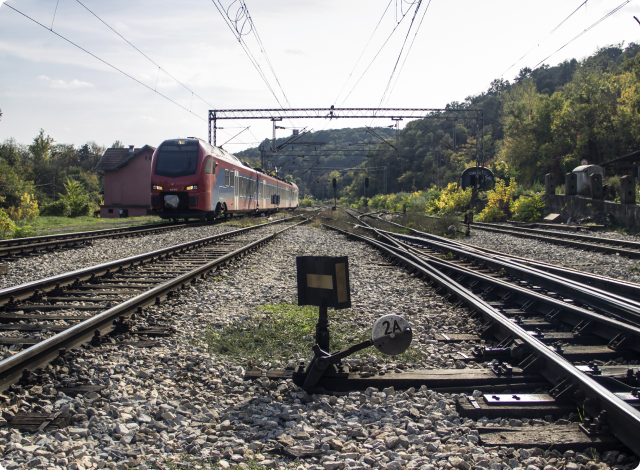
The Belgrade-Niš railway is a central part of the Serbian railway network and a key route for connecting Western Europe with the Western Balkans, Greece and Turkey. This railway represents one of the most important transport corridors and is essential for the development of a sustainable transport system in the country.
Built as a single-track railway, it was put into traffic in 1884.
The modern Belgrade-Niš railway line will contribute to the integration of the national transport market into the EU market by improving and developing railway infrastructure along the Trans-European Transport Network (TEN-T) in line with EU technical interoperability specifications. This will also create new opportunities for integrated and sustainable economic and social growth in the Southeast European region.
The project contributes to the EU policies, in particular the EU Green Agenda, and enhances Serbia’s connectivity, common regional market, and regional integration with the EU.
The modernization of the Belgrade-Niš railway will accelerate the shift to an environmentally friendly and sustainable mode of transport, contributing to the transition to a green economy as well as to the implementation of the Economic and Investment Plan for the Western Balkans and the new Growth Plan for the Western Balkans.